
Chattanooga DUI Records
Chattanooga DUI records usually begin at the Chattanooga City Court and the Chattanooga Police Department records section. From there, a case can move to Hamilton County court records if the matter needs a county-level step or an appeal review. That gives you a solid path for checking a citation, a docket, or a booking report. Chattanooga uses a public records portal and keeps city court files during business hours, so the first search is often straightforward if you know the date and the office.
Chattanooga Quick Facts
Where to Find Chattanooga DUI Records
Chattanooga City Court is located at 700 East 11th Street and handles traffic citations, city ordinance matters, and DUI citations that originate in the city limits. The court keeps public records during business hours, offers online citation search and payment, and processes a large number of cases each year. That makes it the first stop for many city DUI searches. If the case is active, the city court docket usually tells you enough to know whether the file is still moving or already resolved.
The Chattanooga Police Department records section is the arrest side of the search. It keeps DUI arrest records, incident reports, accident reports, booking records, and open records requests. The department runs specialized traffic enforcement units and supports an open records portal. For the source pages themselves, use Chattanooga City Court (City Court), Chattanooga Police Department (Records), and Chattanooga City Court Records. The main city portal at Chattanooga.gov is also useful when you need to move between city departments.
Chattanooga DUI searches often begin with Chattanooga City Court Records, which is one of the main city sources for case information.
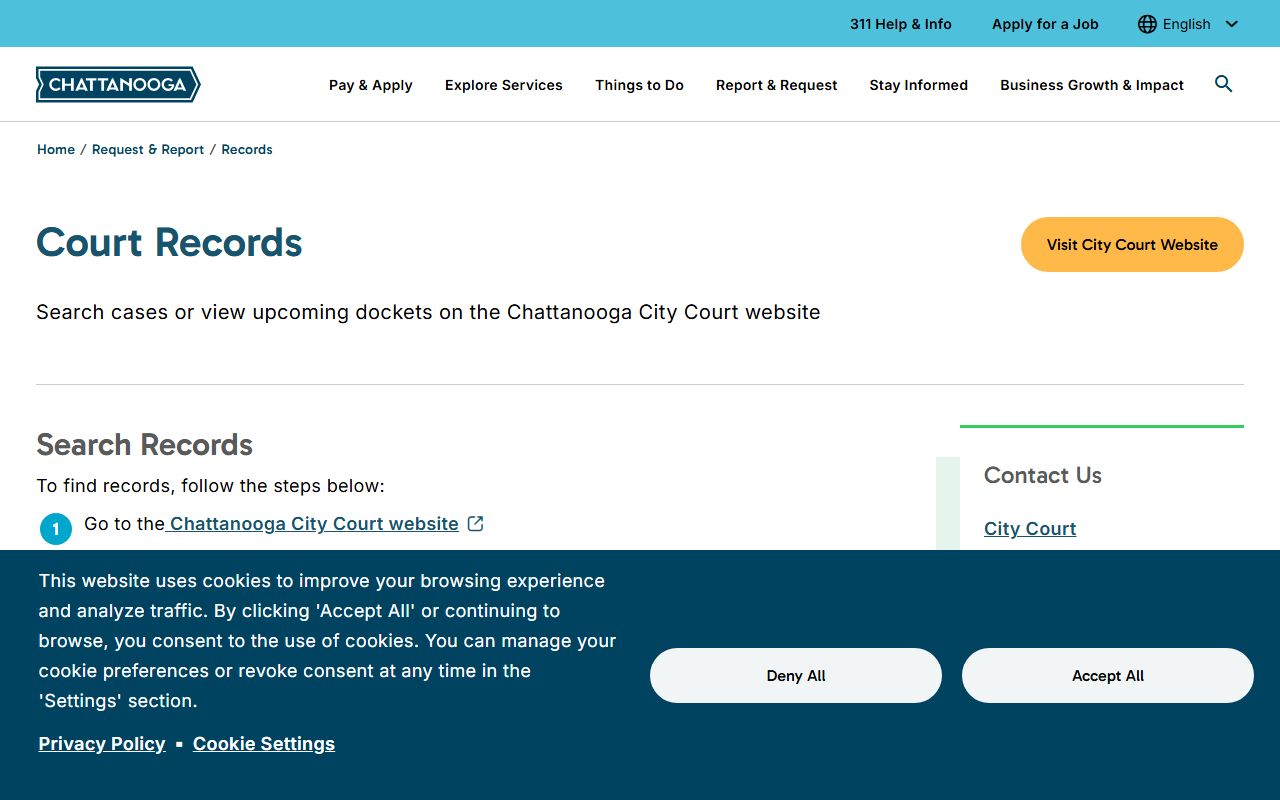
That image works well because the city court record page is the first place many Chattanooga cases appear.
Chattanooga City Court is another useful city source when a DUI search turns on a citation or violations record.
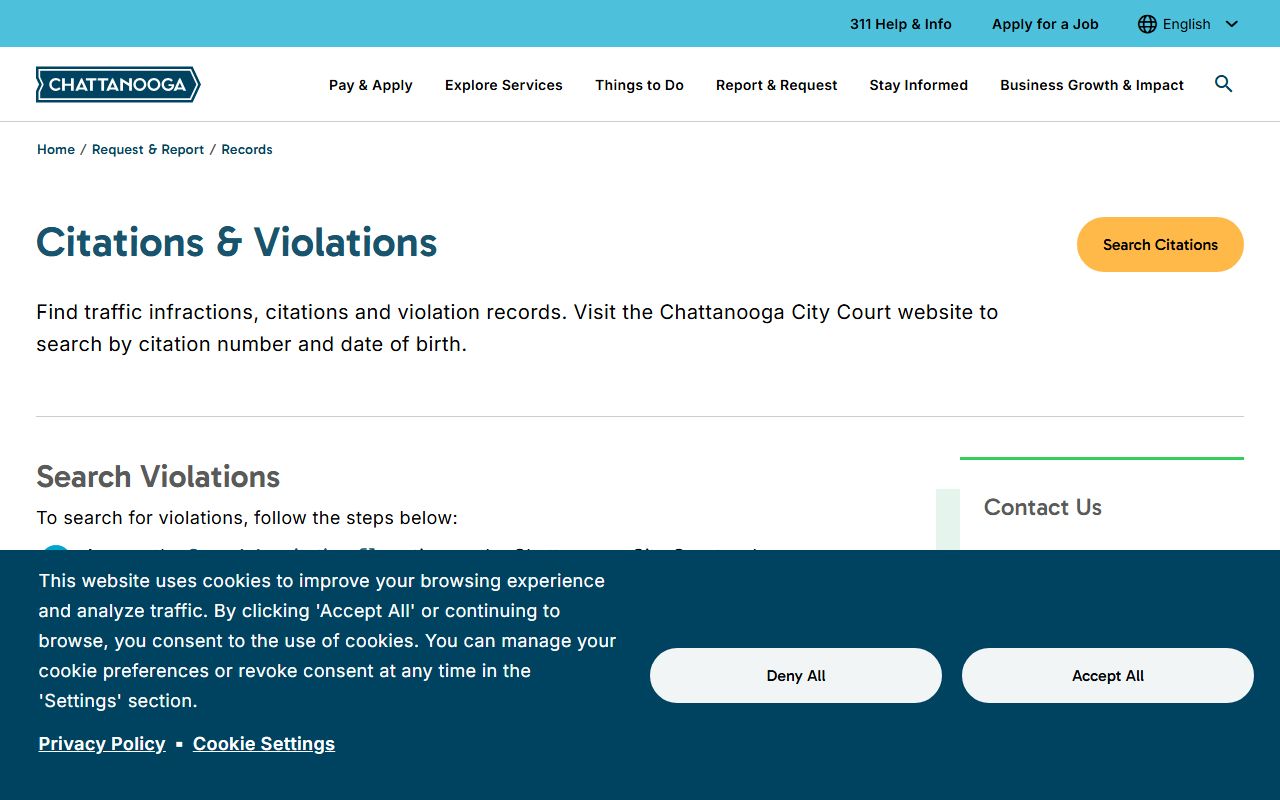
That image fits the city court path because Chattanooga DUI citations usually begin with the city court docket before any county review happens.
How to Search Chattanooga DUI Records
Start with the name, the date, and the office. If you know the citation number, use it. Chattanooga City Court can help you confirm whether the matter is active, and the police records section can help you get the arrest side of the file. The city also supports online citation search and payment, which is useful if the matter is recent. In a city this busy, a short and exact request is much more useful than a broad one.
For broader records support, use Hamilton County resources alongside the city pages. The Hamilton County courts page at Hamilton County Courts can help when a city case moves into county review or when you need a county court reference. The Tennessee courts site at tncourts.gov and the statewide portal at tncrtinfo.com are also useful when you want to confirm basic status before asking for copies. That saves time if the city record has already moved or if the case is older.
Before you contact the city, gather this information:
- Full name of the person in the record
- Approximate arrest or citation date
- City court or police records office
- Case number, citation number, or booking number if available
The Tennessee Public Records Act, T.C.A. § 10-7-503, is the rule that supports a direct records request. Chattanooga can usually work from a simple request if the details are specific and the city office is named.
What Chattanooga DUI Records Show
Chattanooga DUI records can show the citation, the arrest notes, the court date, and the final result. A police report may show the stop location, the arresting unit, and any accident details. The city court file may show a hearing date, a continuance, a plea, or a final judgment. Chattanooga also provides online citation search and payment, so recent cases can often be checked faster than older ones. That helps when you want a quick city answer instead of a long record hunt.
Chattanooga records can also reflect traffic school, payment plans, interpreter services, and other court options. The file may show whether a person qualified for a different outcome, and it may include notes tied to Tennessee DUI law. The rules in T.C.A. § 55-10-401 and T.C.A. § 55-10-406 help explain why those details matter. If the case moved beyond the city court, the Hamilton County file can show the next stage.
Public records are still subject to request rules and redaction. Chattanooga can ask for a more precise request when the city wants to find the right report, and certified copies cost more than plain ones. That is normal. If the record is older, the city may need more time to pull it. The county and state tools are there when the city file alone does not give you the whole picture. They do not replace the city record, but they do help finish the search.
Requests and Copies in Chattanooga
The Chattanooga Police Department records section and the city court both accept requests in person or by mail, and the city court supports certified copies for a fee. If you want the quickest response, be direct about the document you need. Ask for a docket, an incident report, an accident report, or a certified copy, and include the date range. Chattanooga also supports an open records request portal, which can help when you cannot get downtown during normal business hours.
For wider city and county support, keep the official sites handy. The main city portal at Chattanooga.gov can take you back to the court and police pages, and the county courts page at Hamilton County Courts is the follow-up if the case moves beyond the city. For older files, the Tennessee State Library and Archives at sos.tn.gov/products/tsla can help with historical court material.
Chattanooga and Hamilton County Resources
Chattanooga DUI searches work best when the city and county pieces are used together. The city court and police records section handle the first stop, the county court page shows where a city case can land later, and the statewide portals help you check status before you ask for copies. That combination is usually enough to find the record without a long back-and-forth. If a search stalls, the Office of Open Records Counsel at comptroller.tn.gov/office-functions/open-records-counsel can help with request wording.