
Search Nashville DUI Records
Nashville DUI records usually begin at the Nashville Municipal Court, then move through the Nashville Police records unit and, when needed, the Davidson County court system. That gives you a real paper trail if you want a docket check, a citation lookup, or a copy of a final court order. Nashville is large enough that a case can move fast, but the record path is still clear if you know where the first filing landed. Start with the court name, then the date, and the search gets much easier.
Nashville Quick Facts
Where to Find Nashville DUI Records
The Nashville Municipal Court is the first stop for many city DUI cases. It is located at 408 2nd Avenue North, Nashville, TN 37201, and the court handles city code violations and traffic cases that include DUI matters. The court keeps dockets during business hours and supports online citation payment through the city site. That makes it the best place to check if you want to know whether a city case is still open, already resolved, or set for another hearing in Nashville.
The city police records side matters just as much. The Nashville Police Department keeps DUI arrest records, incident reports, booking photos, and related case material through its Central Records Division at 600 Murfreesboro Pike. The division accepts requests in person and online, and the city maintains a records request portal at police.nashville.gov/records. For the source pages themselves, use Nashville Municipal Court, Nashville Police (Police Records), and Metro Clerk.
Nashville Police records is the city office most people need first when a stop has not yet turned into a full court file.
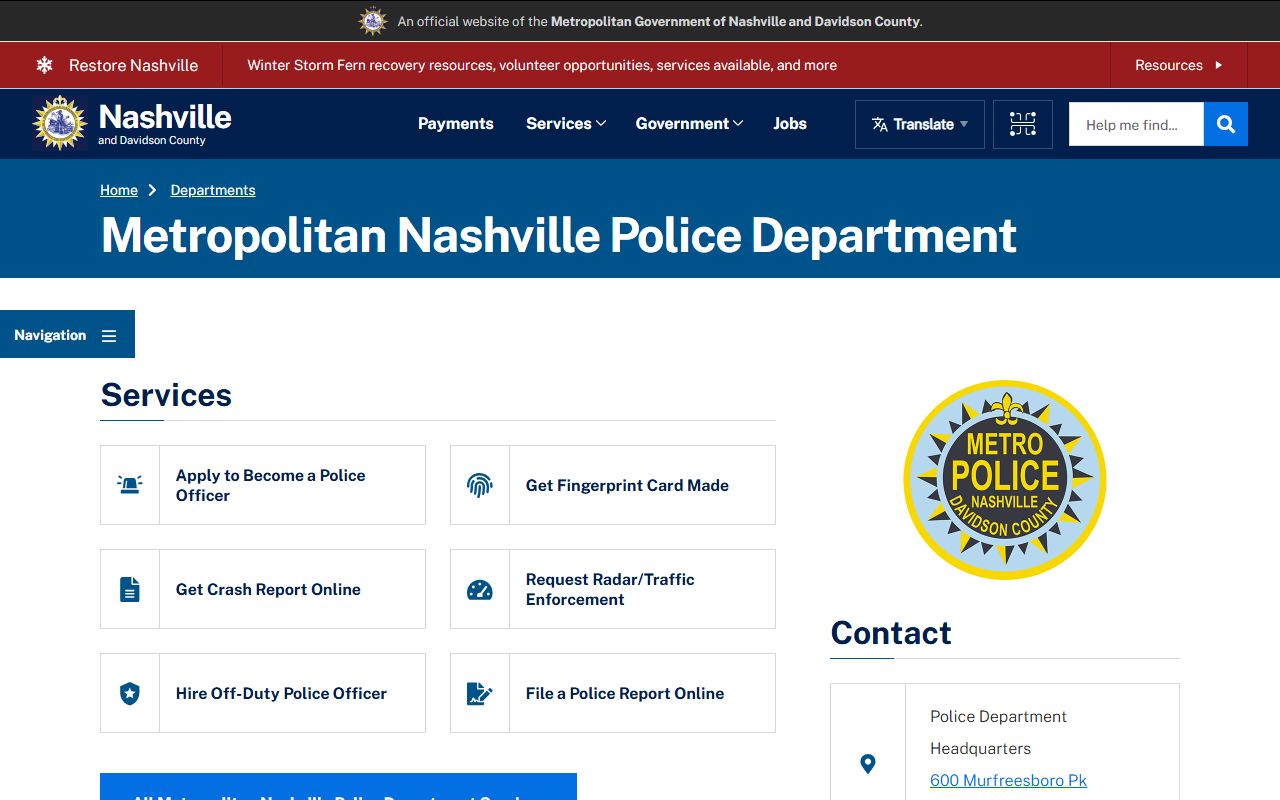
That image matches the records division well, because the arrest side of a Nashville DUI search often comes before the court copy.
When a city case needs a wider look, the Davidson County Circuit Court Clerk is the county-level follow-up. The county clerk keeps the larger record trail, and the county page at Davidson County DUI Records explains the court path in more detail. Nashville cases may move between municipal records, county court dockets, and the state court system, so having both city and county paths matters.
How to Search Nashville DUI Records
Start with a name, a date range, and the office you think handled the matter. If you know the citation number or case number, use it. The Nashville Municipal Court supports online citation payment, and that same city portal can help you confirm whether the matter is active. If you need the arrest side, the police records portal is the faster route. If you need the court side, the municipal court docket and the Metro Clerk are the better places to start.
For broader statewide support, use tncourts.gov and the public case history tool at public case history. Those resources help when a Nashville DUI record has moved beyond the city level or when the case needs to be checked against a county file. The Tennessee Online Court Records portal at tncrtinfo.com is also useful for a quick case check when you want to see basic status before you ask for copies.
To keep the search tight, gather the following before you call or submit a request:
- Full name of the person named in the record
- Approximate arrest or citation date
- Municipal Court or police records office
- Case number or citation number, if you have it
The Tennessee Public Records Act, T.C.A. § 10-7-503, is the rule that supports a direct records request. In Nashville, that means you can ask for a docket, an arrest report, or a certified copy if you know enough detail to identify the file.
What Nashville DUI Records Show
Nashville DUI records can show the full path from stop to court. A police record may show the stop location, booking data, accident notes, and any charge code tied to the arrest. The municipal court file may then show the citation, court date, bond information, a plea, or a final disposition. If the case moves out of city court, the county file can show the next step in Davidson County. That gives you a much cleaner picture than a single summary line on a docket.
Tennessee DUI law often leaves its mark in the records. A court file may refer to chemical testing, an implied consent issue, or a refusal matter. The statutes in T.C.A. § 55-10-401 and T.C.A. § 55-10-406 help explain why those details matter. Nashville also uses diversion programs for some first-time offenders, so the record may show a different path for a case that did not end in a standard conviction.
Not every detail is public in the same way. The city can redact sensitive information, and some records may take longer to produce if they have to be pulled from storage. That is normal when a record request reaches from the police side into the court side. The city and county offices both operate under Tennessee public records rules, but you still need to ask for the right piece of the file. A narrow request is faster and usually returns a cleaner answer.
Requests and Copies in Nashville
Records requests can usually be made in person or by mail. The Nashville Police Records Division says incident reports and accident reports are available, and the municipal court gives certified copies of court papers for a fee. If you want the fastest response, use the city portals, give the date range, and say whether you need a police record, a court docket, or a certified copy. Nashville also maintains an online records request path, which helps if you cannot go downtown during normal business hours.
For city support beyond the court and police desks, the Metro Clerk at nashville.gov/departments/metro-clerk is worth checking. It helps with public records access and can point you toward the right city office. The Tennessee Department of Safety and Homeland Security is the next stop if the DUI case triggered a license issue, but for the record itself, Nashville city and Davidson County offices remain the core sources. If the matter is old, the Tennessee State Library and Archives at sos.tn.gov/products/tsla can help with older court material.
Nashville and Davidson Resources
Nashville searches work best when you use the city and county tools together. The city portal at nashville.gov gives you the court and police pages, the Metro Clerk page supports records access, and the Nashville Police records portal can show the arrest side. The county page at Davidson County DUI Records fills in the broader court path when a city case moves on or when you need the county-level file.
If a Nashville DUI case has to be checked against broader state access rules, the Office of Open Records Counsel at comptroller.tn.gov/office-functions/open-records-counsel can help explain what a Tennessee public records request should look like. That is useful when the city wants a tighter request or when you want to narrow the search before asking for copies.